
Marlboro County Criminal History Checks
Start with the kind of answer you need. The South Carolina Trial Court Public Index is the first stop for a filed Marlboro County criminal case. Choose Marlboro, accept the notice, complete the security check, and search with a case number or a small set of name and date filters. The index can show case parties, docket actions, charges, disposition, money entries, and some document images. It is not a certified file, and not every municipal matter appears there.
A statewide identity report is different. SLED CATCH searches fingerprint-supported South Carolina arrest and conviction data by name and birth date. Recent custody belongs to the Marlboro County Detention Center, while a police narrative stays with the office that wrote it. Keep the full legal name, birth date, spelling variants, and known record numbers close at hand.
- Define whether the goal is a court outcome, booking, incident report, warrant check, or statewide history.
- Search the matching official index with one or two broad fields, then add filters only when results are too wide.
- Compare identifiers and dates before treating a result as the right person or event.
- Open the related docket or contact the record creator for detail that the first result does not hold.
- Request a certified copy or official SLED report when an informal screen is not enough.
Note: A missing web result does not prove that Marlboro County has no record; older, summary-court, and newly filed matters may need direct confirmation.
Marlboro County Record Search Channels
Three Marlboro County systems answer different questions. CATCH supplies an identity-based South Carolina history. The Public Index follows a filed case. The Marlboro County Detention Center confirms local custody and booking information. An incident report adds the event narrative, but only the agency that created it can process that request. No single database merges all four layers.
The official SLED CATCH search interface shows the terms and entry point for the statewide name check.
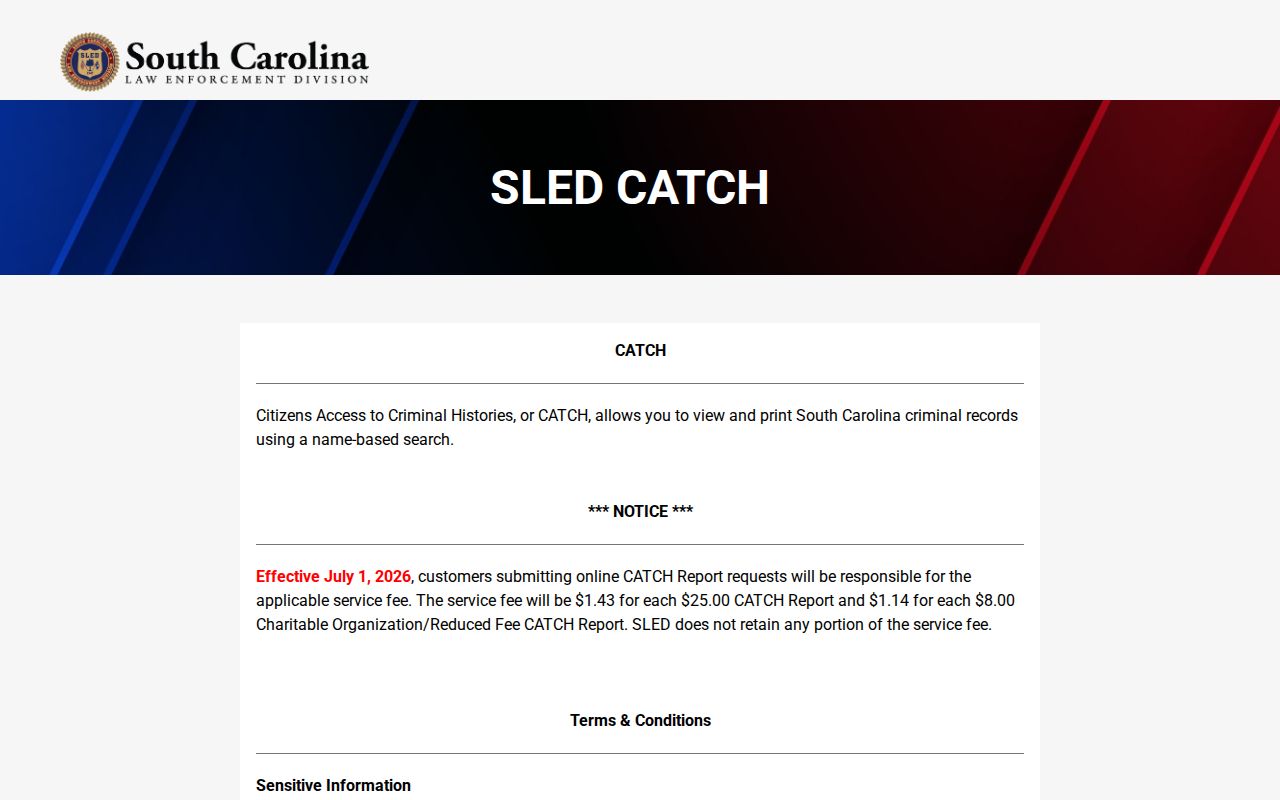
The screen is useful for a statewide report, but Marlboro County court files, live warrants, registry data, and local report narratives still require their own official channels.
| Question | Best first channel | Key limit |
|---|---|---|
| What was filed and how did it end? | Marlboro Public Index or Clerk | Online images and municipal coverage vary |
| Is a person in local custody? | Marlboro County Detention Center | No verified public county roster |
| What does the state history show? | SLED CATCH | South Carolina only; no warrants or registry search |
| What happened at the scene? | Arresting or investigating agency | Protected parts may be redacted |
Official Background Checks in South Carolina
The South Carolina Law Enforcement Division, Criminal Justice Information Services, maintains the Central Record Repository. Any public user may order the $25 CATCH name check. Online card orders also carry the service fee posted by the portal. A mail request uses the SLED criminal-record form, a self-addressed stamped envelope, and a business check, certified or cashier's check, or money order. Personal checks and cash are not accepted by mail.
CATCH begins with first name, last name, and birth date. A Social Security number is searched if supplied. Aliases or bad identity data may produce a false match or miss. SLED treats fingerprints as the sounder identifier but uses them only when statute permits. A person reviewing a national record can use the FBI Identity History Summary process.
| Official service | Published charge | What it does |
|---|---|---|
| SLED CATCH online | $25 plus posted service fee | South Carolina name-based history |
| SLED CATCH by mail | $25 | Mailed state report; certification must be requested |
| Approved charitable request | $8 when qualified | Reduced-fee CATCH route with verification details |
| FBI personal summary | $18 | Fingerprint-based national self-review |
Why Marlboro County Records Diverge
A Marlboro County criminal record changes hands as a case moves. An arresting officer creates the incident and arrest paperwork. When detention staff fingerprint a person during booking for a state offense, the agency or facility must submit those fingerprints to SLED within three days, excluding weekends and holidays. The jail keeps its booking file. Court staff later report charges and dispositions to the repository.
The SLED CJIS repository overview identifies the state units that receive, maintain, and disseminate criminal-history data.
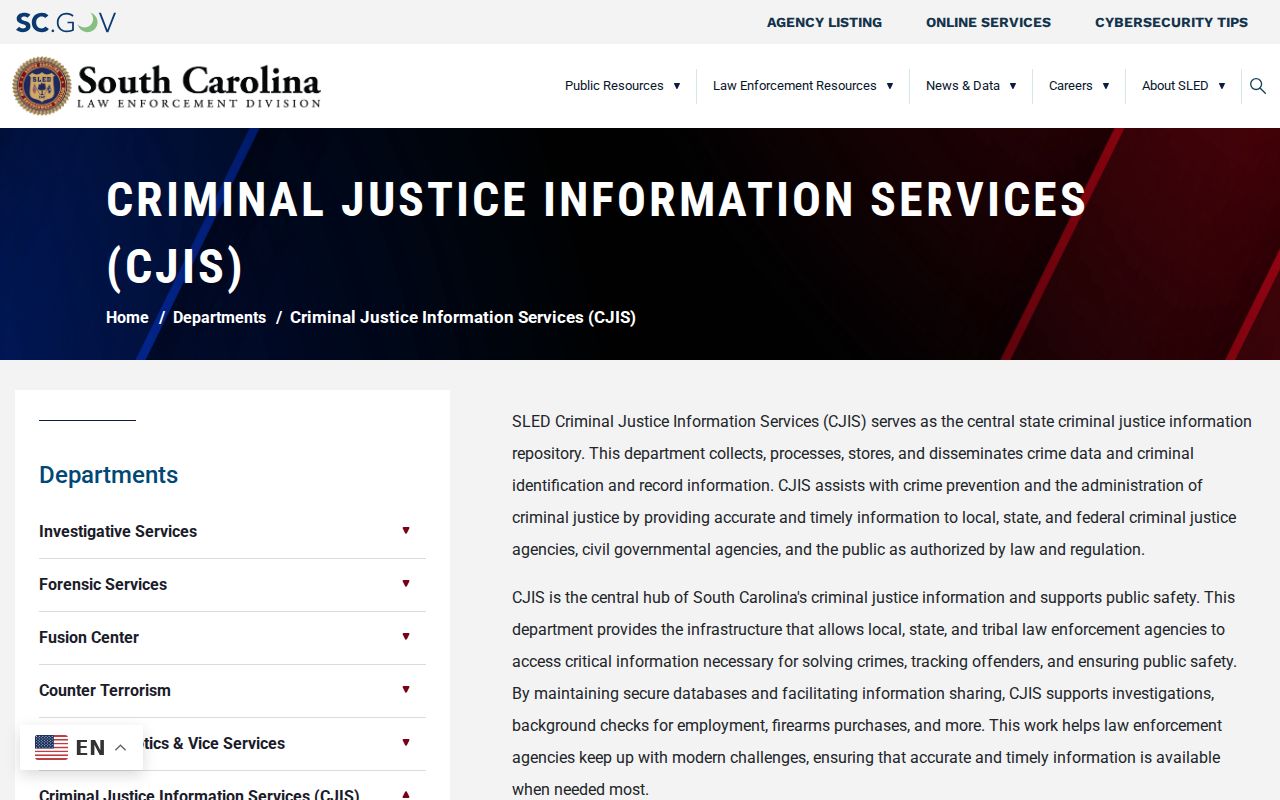
That lifecycle explains common gaps. A new Marlboro County booking can exist before a court case is filed. A disposition can appear at the clerk before the statewide history updates. If the fingerprint or identity data does not match, an arrest may fail to connect to the expected CATCH result. Compare the original Marlboro County file with the repository report before asking SLED to review an error.
Kinds of Criminal Records
Criminal records in Marlboro County are grouped by event, custodian, and stage. The arresting agency holds the law-enforcement account. Detention staff hold intake and release data. General Sessions, magistrate, and municipal clerks keep their own case files. SLED compiles fingerprint-supported state history, while DPPPS manages state probation and parole information. The sex offender registry is a separate public-safety system.
- Incident and arrest records: agency narratives, response facts, and arrest paperwork, subject to lawful redaction.
- Booking and custody records: intake identifiers, initial charges, bond, holds, and release status at the detention facility.
- Court case files: filed charges, docket actions, pleas, judgments, sentences, and financial entries at the proper clerk.
- State criminal history: SLED's identity-based compilation of reported South Carolina arrests and dispositions.
- Warrant and supervision records: court process, service information, sentences, probation, and parole kept by different authorities.
- Registry records: statutory sex-offender identity, offense, address, and compliance information under conditions of use.
Juvenile files and sealed matter do not follow ordinary public access. Federal cases and custody are separate as well. FCI Bennettsville sits in the county, but its cases use PACER and its custody data comes from the Federal Bureau of Prisons, not Marlboro County or SCDC.
Marlboro County Criminal Record Offices
Marlboro County's main records offices form a tight cluster in Bennettsville. The Clerk of Court at 105 Main Street handles General Sessions case files. The Magistrate and Bond Court at 249 Throop Street handles summary matters, warrants assigned there, and bond proceedings. The Sheriff's Office at 239 Throop Street holds its own law-enforcement records. The Detention Center at 253 Throop Street is the local booking and custody contact.
The Judicial Branch Marlboro courthouse profile confirms the court location, Fourth Judicial Circuit assignment, and clerk contact.
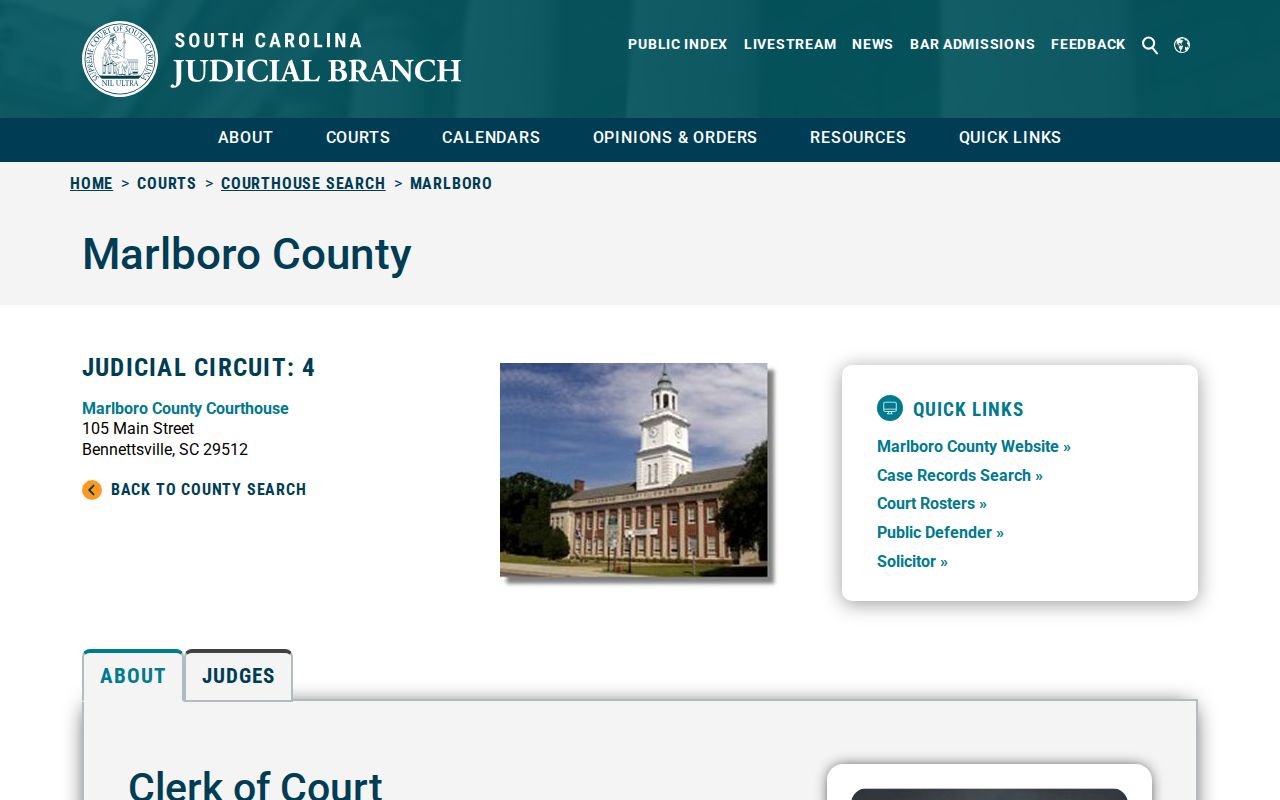
The courthouse image marks the case-record hub, not a one-stop police or jail counter. Call before travel because the reviewed official pages did not publish regular lobby hours, parking rules, or a records-room number.
Clerk of Court
105 Main Street
Bennettsville, SC 29512
843-479-5615
Filed General Sessions cases and copies
Sheriff's Office
239 Throop Street
Bennettsville, SC 29512
843-479-5605
Sheriff-created incident and arrest records
Detention Center
253 Throop Street
Bennettsville, SC 29512
843-479-5629
Local booking and custody questions
Magistrate and Bond Court
249 Throop Street
Bennettsville, SC 29512
843-479-5620
Summary matters, assigned warrants, and bond
Marlboro County Criminal Records: What They Contain
The fields in Marlboro County criminal records depend on the source. A SLED history holds identity data, arrest cycles, charges, agencies, and reported outcomes. A Marlboro County court record centers on its case number, parties, actions, documents, finances, status, and disposition. A Marlboro County booking record focuses on intake, charges, custody, bond, and release.
| Name & Identifiers | Legal name, aliases, birth data, and system identifiers used to distinguish people. |
|---|---|
| Arrest / Booking Data | Arrest date and agency, intake time, initial charges, holds, bond, custody, and release data where public. |
| Charges & Statutes | Offense descriptions and code citations as alleged, filed, amended, or indicted. |
| Disposition | Pending, dismissed, nolle prosequi, acquitted, or convicted status reported by the court. |
| Sentence | Confinement, probation, fines, fees, restitution, or other terms ordered after conviction. |
| Custody / Supervision | County detention, state prison, probation, or parole status within the scope of that system. |
Do not read an arrest label as the final charge. The Fourth Circuit Solicitor may change or decline a charge, and a grand jury may return a true bill or no bill. The disposition, not the mere presence of a Marlboro County docket, shows whether a filed count ended in a conviction.
Marlboro County Custody Record Boundaries
Local, state, and federal custody searches do not overlap. Marlboro County Detention Center is the first call for a new arrest, pretrial detention, or short local sentence. No official online Marlboro County jail roster was verified. South Carolina VINE supports notices, but direct Marlboro County detention confirmation remains vital.
SCDC's locator covers current state prisoners as of midnight the prior day. It omits released people, Marlboro County detention sentences, community supervision, juveniles housed with SCDC, and current SCDC fugitives. FCI Bennettsville uses the federal BOP locator.
The official Marlboro County government site is the county-level reference point for local offices and services.
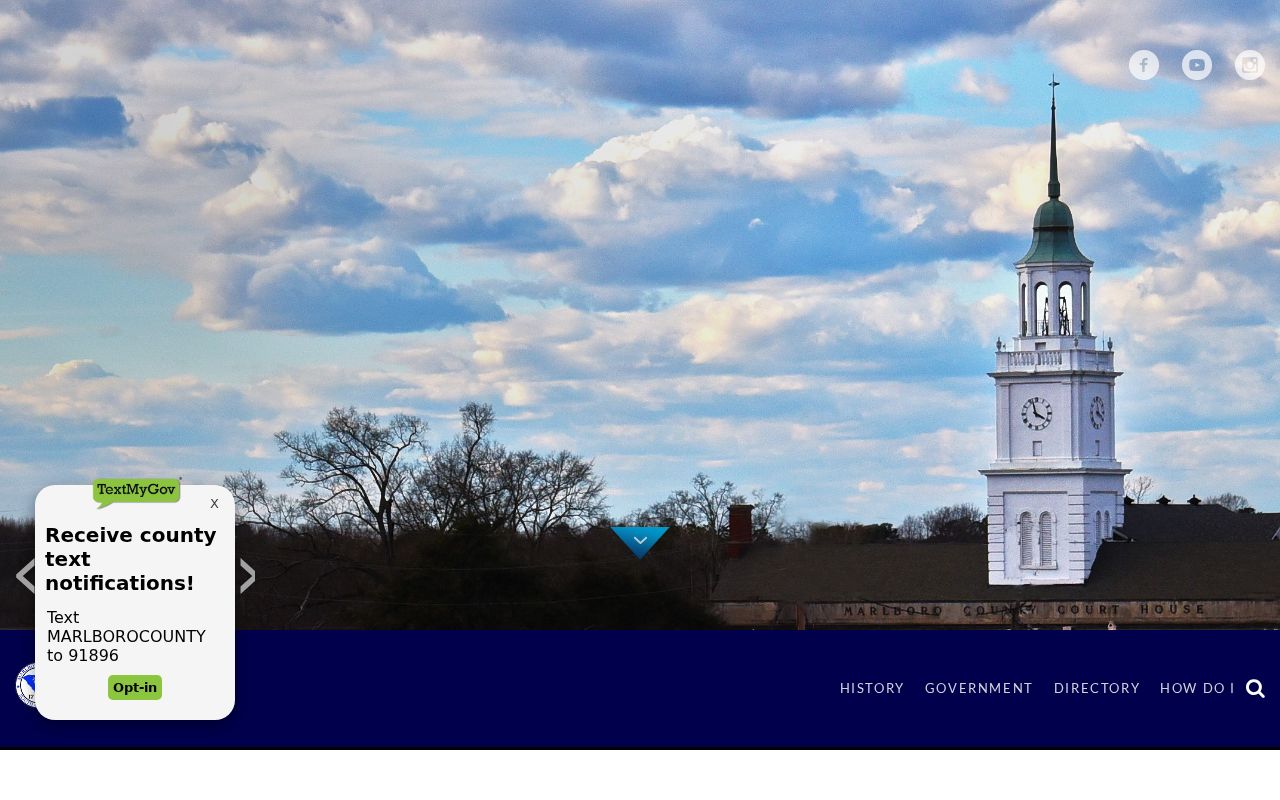
Its county frame helps separate local detention records from state and federal systems that happen to serve or sit within Marlboro County.
Marlboro County Warrant Record Fallbacks
No official public active-warrant database, sheriff most-wanted page, or verified Marlboro County law-enforcement app was found. CATCH also excludes wanted-person information. The safe chain is direct: call the Sheriff's Office, contact Magistrate or Bond Court for a warrant tied to that court, and examine the related criminal docket or ask the Clerk about a General Sessions bench-warrant entry.
An arrest warrant permits arrest based on an accusation and probable cause. A Marlboro County bench warrant is court process, often tied to failure to appear. A search warrant permits a search for described evidence. A docket may note warrant activity, but it is not live confirmation.
Someone checking a personal warrant should use the case or citation number, confirm the exact issuing court, and ask for appearance or payment instructions. If surrender may be required, confirm the place and time and seek counsel. Do not rely on a lack of Marlboro County web results as an all-clear.
South Carolina Public Access Laws
South Carolina law provides access by record and custodian, not one universal file. A FOIA request goes to the body that holds the item. That means the Marlboro County sheriff for sheriff reports, detention staff for confinement records, and the clerk for court files. Protected Marlboro County criminal records may be withheld or redacted.
Key statutes and rules:
South Carolina FOIA, Title 30 Chapter 4 grants access to nonexempt public records held by public bodies.
S.C. Code §23-3-120 requires criminal-data and fingerprint reporting to SLED's repository.
SLED Regulations 73-23 and 73-24 govern dissemination and personal review or correction.
S.C. Code §17-1-40 controls destruction and sealed retention for qualifying arrest and case records.
S.C. Code §§17-22-910 through 17-22-950 set the forms, routes, fees, and verification steps for expungement.
The Public Index applies its own notices and technical limits. Since January 1, 2026, it no longer displays home addresses in new or existing cases. A missing address is therefore a privacy change, not proof that the Marlboro County case or party disappeared.
Marlboro County Supervision Records
South Carolina DPPPS runs probation, parole, and pardon services. Its Marlboro County office is at 105 E. Main Street in Bennettsville, 843-479-3041. Start with the Marlboro County docket for the sentence, check DPPPS public coverage, then ask the office how to verify current public status.
The DPPPS Marlboro County office profile identifies the local supervision contact.
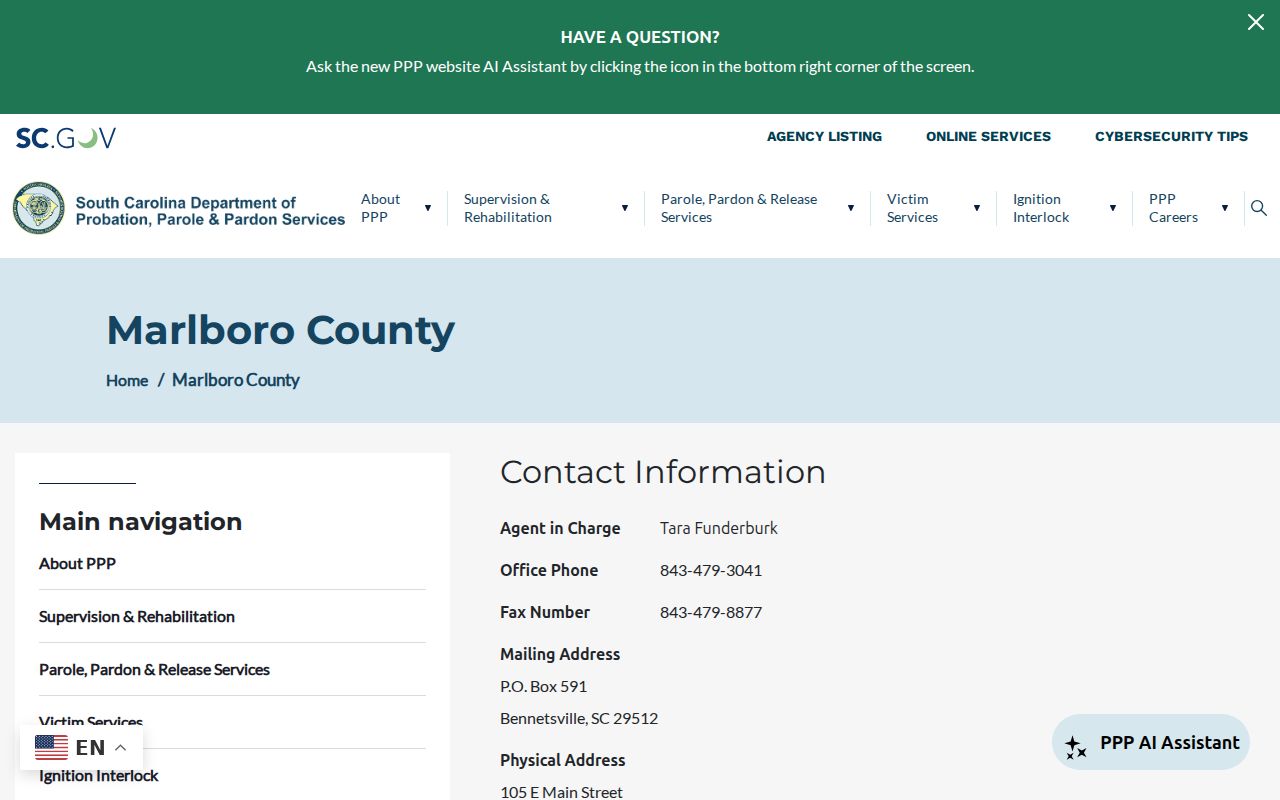
The Marlboro County listing belongs to a state supervision system, not the Clerk, jail, or SCDC. Probation is a community sentence ordered by a court. Parole is conditional release from prison. A pardon is separate relief and does not erase a Marlboro County criminal record.
Two specialty paths also serve Marlboro County. Supreme Court orders document the Fourth Circuit Adult Drug Court in Marlboro and an Adult Mental Health Court that serves the circuit. Their existence does not promise admission. The court and program must confirm eligibility, current process, and the effect of any sanction or completion on the case docket.
Restricted, Sealed & Expunged Records
Juvenile files, protected victim details, personal identifiers, and sealed or expunged matters are not ordinary public-index material. In eligible cases, South Carolina expungement uses an Order for Destruction of Arrest Records. The route depends on where the charge ended. General Sessions applicants begin with the Fourth Circuit Solicitor, while dismissed, acquitted, or nolle-prossed summary matters ordinarily begin with the magistrate or municipal court that handled them.
For a fee-bearing General Sessions route, official instructions list separate certified checks or money orders: $250 for solicitor administration, $25 for SLED verification when applicable, and $35 for clerk filing when applicable. Some dismissed or discharged Marlboro County matters are exempt from the first fee. Qualifying summary-court relief carries no fee.
SLED advises allowing four weeks after it receives an order, then ordering a new CATCH report to verify removal. If the Marlboro County charge remains, take the certified order and disposition back to the issuing court or solicitor and SLED CJIS. Sealed investigative material can be kept for limited statutory purposes, but it is not an ordinary public record.
Marlboro County Fingerprint Record Checks
A name search and fingerprint check solve different identity problems. CATCH may miss or mismatch Marlboro County records when aliases or identity data differ. SLED's review process calls for identity details, an approved fingerprint card, and the individual request. A Marlboro County court disposition can explain an error, but the index is not a state rap sheet.
The official IdentoGO South Carolina service page provides appointment and service selection for approved fingerprint needs, including Print and Go card capture.
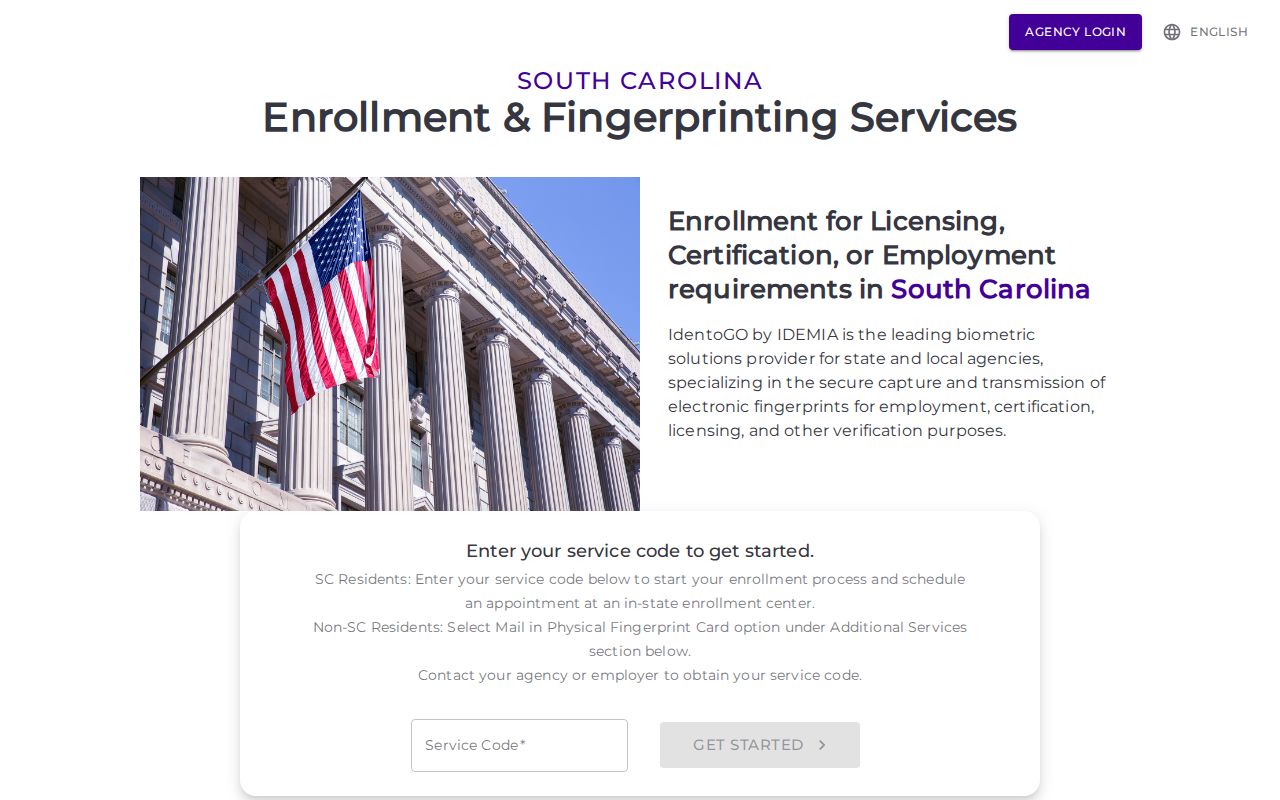
The image represents the capture channel, not permission for any use. SLED performs fingerprint-based criminal checks only when South Carolina law authorizes or requires them. A person seeking an FBI Identity History Summary for personal review must use the FBI's own electronic or mail process.
- Disposition
- The court's outcome for a charge, such as dismissal, acquittal, or conviction.
- Nolle prosequi
- A prosecutor's decision to discontinue a charge without a conviction on that count.
- Recognizance
- Pretrial release based on a promise to return, rather than cash or surety security.
- Expungement
- The statutory process used to remove or destroy eligible public arrest and court records.
Marlboro County Court Record Fields
The Marlboro County Public Index search works best when broad. A General Sessions number uses yyyyGS34xxxxx, with 34 as the county code. Without it, begin with a name and criminal case type. Filters are combined, so too many can hide a result. Linked details may show actions, finances, or document images.
The official FBI Crime Data Explorer offers a separate view of reported crime data rather than individual Marlboro County case files.
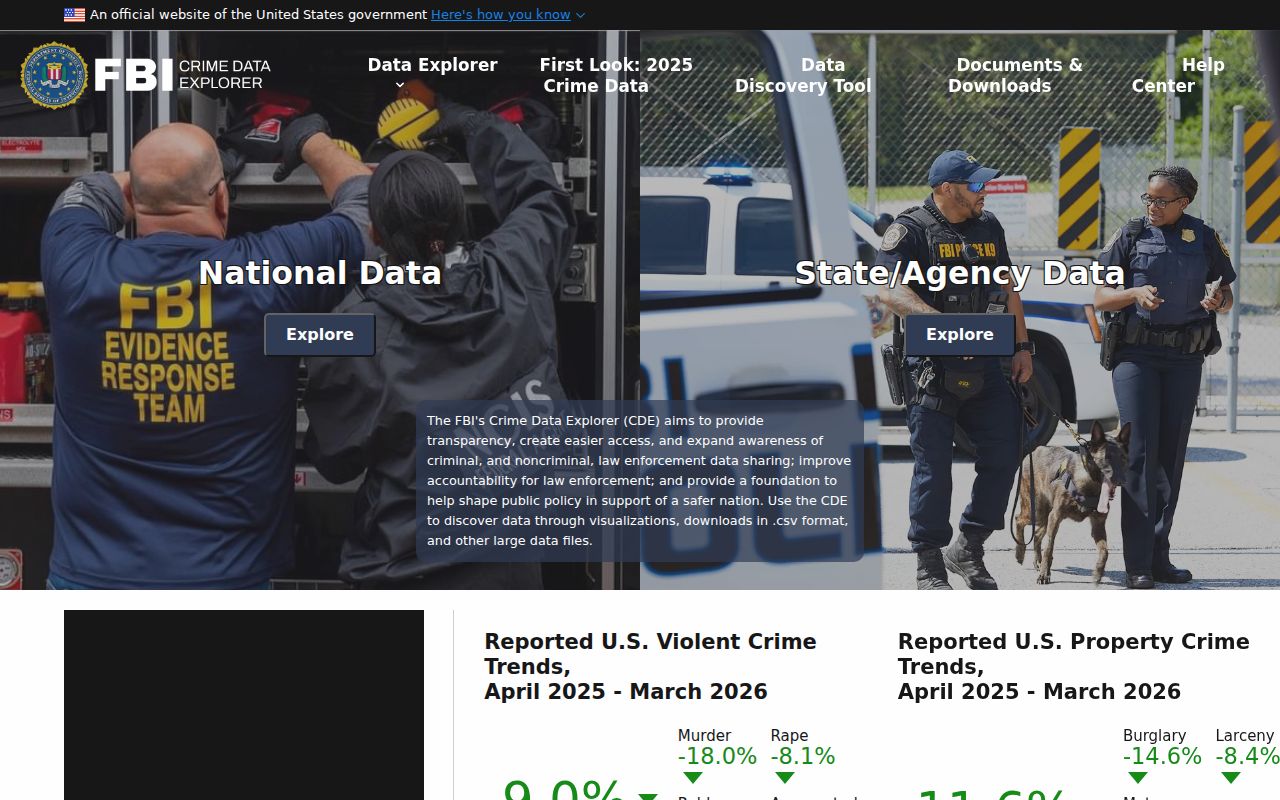
Crime counts need the agency, year, population base, and reporting completeness beside them. An absent or partial agency report must not be read as zero crime, especially when comparing Bennettsville, McColl, and Clio.
For case research, useful Public Index controls include Case Number, Name or Last Name-Business, Court Type, Court Agency, Case Type, SubType, Party Type, Action Type, and date type or range. Open the linked case, inspect the disposition, and ask the Clerk for a certified copy or an image that is not online. The full Marlboro County court case lookup explains the filed-case path in more depth.
City-by-City Criminal Records in Marlboro County
Bennettsville, McColl, and Clio are Marlboro County's three largest incorporated places. Their police agencies create local incident and arrest reports, and their municipal courts keep qualifying town or city matters. Bookings then route to the county detention channel, while higher filed charges move to General Sessions. State Public Index coverage for municipal matters can be incomplete, so a town counter or written FOIA request remains part of the search.
The city cards keep the record creator clear. Bennettsville also requires one extra distinction: FCI Bennettsville is federal, so its inmate and case records belong to BOP and PACER rather than the city, Marlboro County, or SCDC.
Bennettsville Record Check
County seat with city police and Municipal Court records, plus nearby county offices that hold later record stages.
McColl Record Check
Town records start locally; county booking and General Sessions systems remain separate, and CATCH does not cross into North Carolina.
Clio Record Check
Town police and municipal files need a direct request when no online result appears, with county channels used for later stages.