
Clio Criminal History Checks
Clio has no verified stand-alone police record portal, electronic request form, municipal case lookup, arrest blotter, or law-enforcement app. The useful path is a short chain of official custodians. Ask for the narrowest record first, then move to county or state sources only when the case stage calls for them.
- Contact Clio for the Clio police or municipal office that made and holds the Clio record.
- Describe the incident number, date, place, people named, record type, and desired format in a focused request.
- Ask Clio Municipal Court about a Clio citation or qualifying summary case by name and case number.
- Contact Marlboro County detention for booking or custody and search the Public Index for a filed higher case.
- Use SLED CATCH only when a South Carolina name-based history, rather than the Clio report, answers the question.
Each step tests a different record. A Clio incident report may never become a booking. A booking charge may change before court. A court disposition may reach the state repository after a reporting delay.
Clio Police Records Use Town Contact
The direct route matters in Clio because research did not verify a public Clio database. Contact Clio and ask which office now holds Clio police reports, what identifiers the clerk needs, whether inspection is available, and what fee applies. No current official record-unit address, phone, hours, form, or price was established, so those details should not be guessed or copied from another municipality.
The South Carolina Association of Counties identifies Clio among Marlboro County's municipalities. Its Marlboro County municipalities profile is the source for the county context shown below.
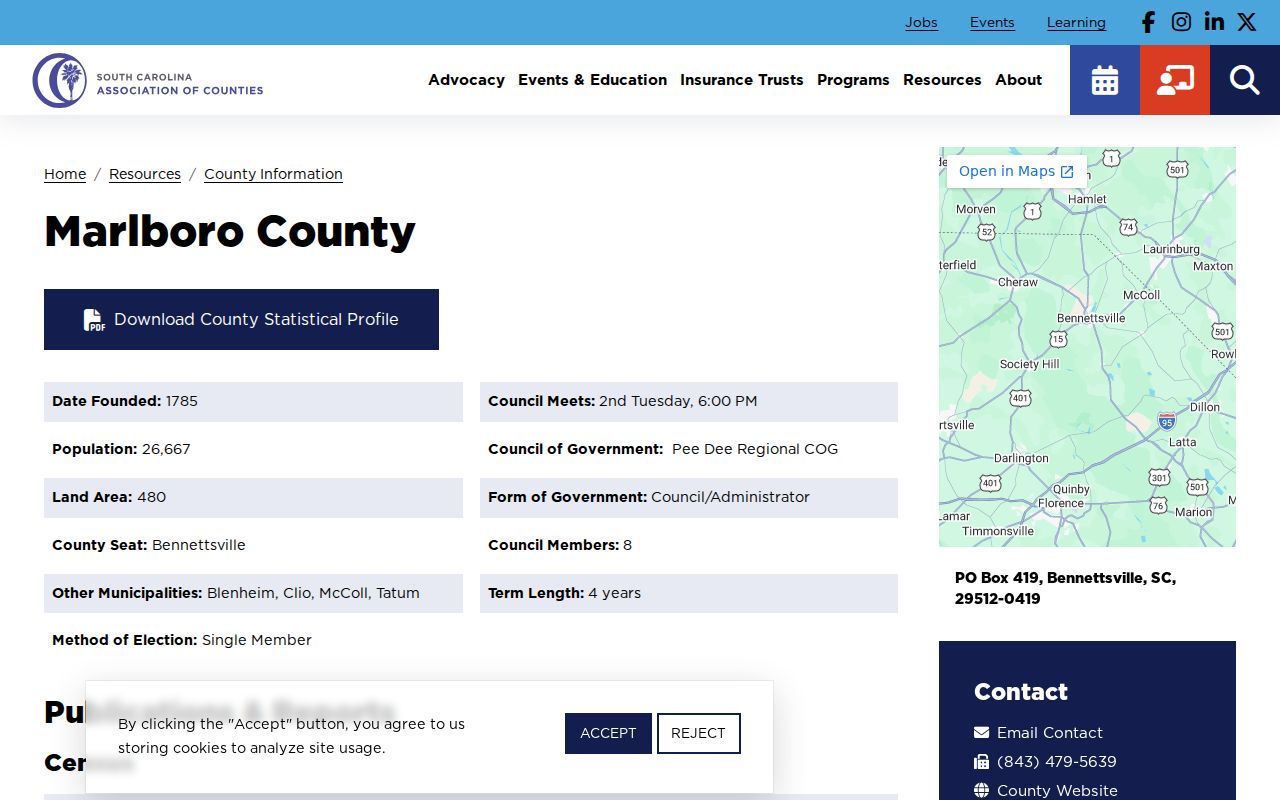
The image places Clio inside the county without blurring Clio custody of police and municipal records.
A written South Carolina FOIA request should seek an existing document, not ask Clio to create a new history report. Give a date range and location, and request advance notice of cost. Clio can redact or withhold protected parts of an active investigation, juvenile file, victim-sensitive record, or personal identifier.
Records at the Clio Police Department
Clio police create the report for an event they investigate. That file can hold an offense classification, date, place, responding agency facts, a narrative, and public supplements. It documents the report and law-enforcement response. It does not prove guilt, and it is not the same as the booking entry made by the county detention center.
Ask whether Clio can locate the Clio file with an incident number. If that number is not known, give a tight date range, location, and record type. Confirm the correct delivery method before sending sensitive data or payment. If Highway Patrol or the Marlboro County Sheriff's Office made the report, the request must go to that agency instead. Public bodies generally respond for records in their own custody.
Note: The Clio report can exist even when no arrest occurred, while a later court case may use a charge that differs from the first police label.
Clio Records Have Four Custodians
The same Clio event can produce separate records at four offices. The Clio police file explains the reported event. The Marlboro County Detention Center records intake and custody. The Clio or county court records the filed case and outcome. SLED compiles fingerprint-supported South Carolina history reported by agencies and courts.
| Record Needed | Clio Starting Point | What It Answers |
|---|---|---|
| Incident or arrest report | Clio police channel | What was reported and how police responded |
| Booking or custody | Marlboro County Detention Center | Intake, initial charges, bond, custody, or release |
| Municipal or filed case | Correct court clerk | Charge, docket steps, disposition, and sentence |
| State criminal history | SLED CATCH | South Carolina name-based history supported by reported data |
Choosing by record type is more reliable than choosing by where a person lives. The county clerk does not become the keeper of the Clio police narrative, and SLED does not replace either Clio file.
Booking and Arrest Records in Clio
When a Clio arrest is booked locally, the custody record belongs to the Marlboro County Detention Center at 253 Throop Street in Bennettsville. The public facility number is 843-479-5629. No verified official Marlboro jail roster was found, so call or request the confinement-identification record instead of relying on an unofficial arrest list.
South Carolina law requires fingerprints during booking for a lawful custodial arrest on a state offense and calls for submission to SLED within three days, excluding weekends and holidays. That timing does not make CATCH a live booking log. SC VINE can provide custody and notification help, while the SCDC locator covers people currently sentenced to and incarcerated in state prison. Neither should be read as a complete Clio arrest history.
The broader Marlboro County arrest search explains the detention, court, and repository checks when a Clio arrest crosses into county systems.
Clio Crime Counts Need Context
Clio ranks third among Marlboro County's incorporated places, with a 2020 Census count of about 606. In Clio, a small change in the number of reported events can create a large-looking rate change. A raw count should always carry the year, population base, reporting agency, and completeness note.
Use only SLED Crime in South Carolina tables or the FBI Crime Data Explorer for a current Clio comparison. The official Marlboro County agency directory supplies the Clio government context pictured below.
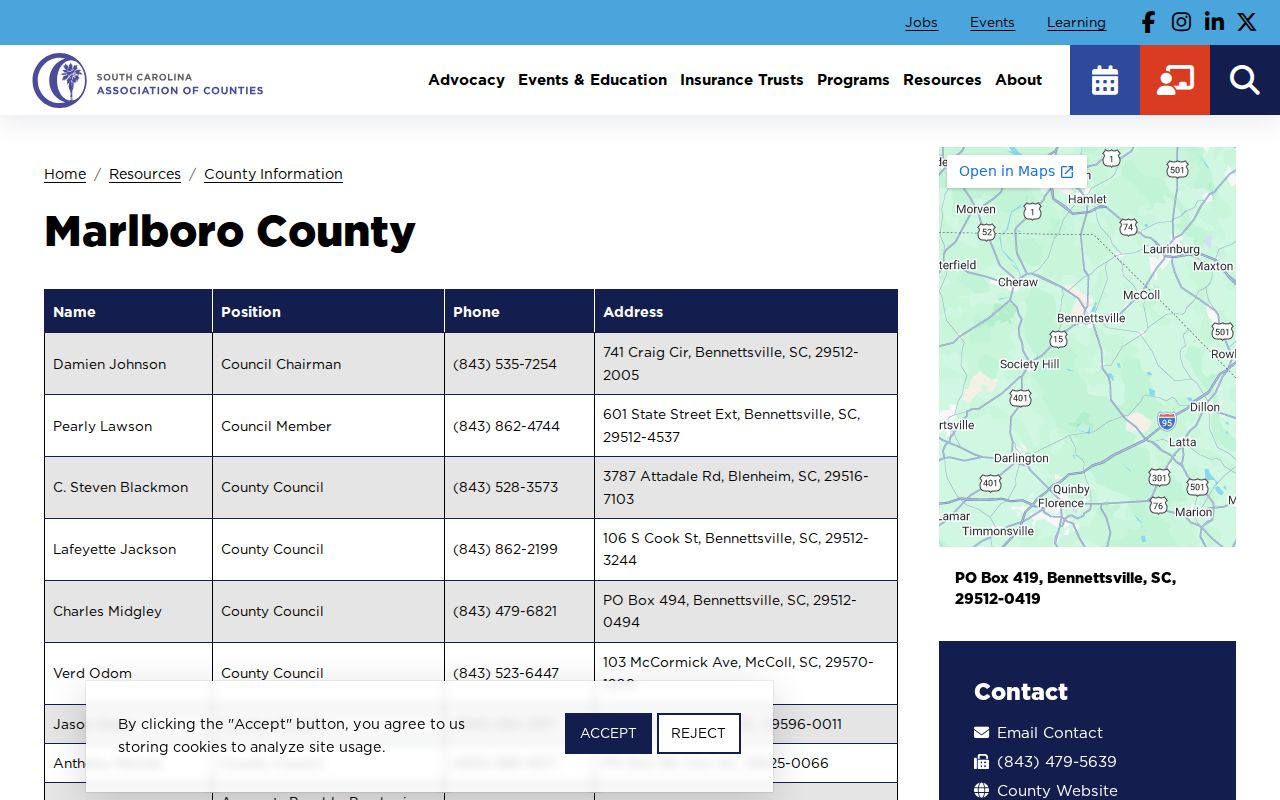
The image helps identify official county offices, but it does not substitute for a Clio police report or identify a specific person's record.
A Clio agency missing from a table may have partial or absent reporting. That must not be described as zero crime. Trends also do not tell whether a named person has a record.
The Clio Municipal Court File
Clio Municipal Court keeps qualifying Clio ordinance and summary matters within its authority. Higher charges move to Marlboro County General Sessions. Because no verified Clio case portal or current contact block was located, confirm the Clio clerk, counter, phone, hours, and copy fee through Clio government before relying on older directory data.
| Court Name | Clio Municipal Court |
|---|---|
| Case Types Heard | Clio ordinance and qualifying summary matters within municipal jurisdiction |
| Case Lookup Channel | Direct court verification; some municipal matters may appear in Marlboro Public Index |
| What the Docket Shows | Case identity, charge or citation, actions, status, disposition, and financial entries where kept |
| Copies and Fees | Confirm with the court; no verified Clio fee schedule was found |
Use a Clio citation or case number if possible. A name-only search can confuse similar names, and an index entry is not a certified copy. The court that holds the file supplies certification.
Missing Clio Records Need a Fallback
A Clio matter may be real even when it is absent from a web search. Municipal participation in South Carolina's Public Index is not complete. Older cases may lack scanned images. A new booking can also predate the filed court entry, and a name variation can defeat an exact search.
First call the Clio office for a municipal or police file. Next use the South Carolina Case Records Search, choose Marlboro County, and begin with one or two fields. A Clio-linked General Sessions number uses the `yyyyGS34xxxxx` pattern, with 34 as the county code. For an older file or certified copy, call the Marlboro County Clerk at 843-479-5615 or visit the courthouse at 105 Main Street in Bennettsville.
Note: All Public Index filters are combined, so too many details can hide a valid Clio result instead of making the search more accurate.
How Clio Records Reach the County
The route depends on what happens after the Clio report. A qualifying municipal matter can remain with Clio's court. A felony or other higher criminal case moves into Circuit Court's Court of General Sessions after prosecutorial review. Booking data remains at the detention center, and reportable fingerprint and disposition data moves to the state repository.
Record flow: Clio Police Department › Marlboro County Courts › South Carolina Law Enforcement Division
The flow is not a promise that each database updates at once. The booking charge is a snapshot. The solicitor may change or decline it. The court docket then records the filed path, while SLED depends on source submissions. Compare the court disposition with the state record when accuracy matters.
When the dates do not line up, ask each custodian when its entry was made and which identifier links it to the same Clio event. That check is more sound than choosing the newest screen by itself.
Clio Reports Are Not State Histories
SLED CATCH is the official public South Carolina name check. It costs $25 plus the posted online service fee, uses name and date of birth, and can search a Social Security number if supplied. It excludes wanted-person and sex-offender-registry searches. Name variations and aliases can create false matches or missed records, so fingerprints are the stronger identifier where an authorized process uses them.
For personal national self-review, the FBI offers an Identity History Summary request with fingerprints. The FBI electronic identity-history channel shown below is distinct from Clio police, county court, and SLED CATCH sources.
The federal channel serves personal identity review, while a Clio incident narrative still must come from the agency that created it.
Clio Warrant Checks Stay Direct
No verified Clio public warrant list, app, or Clio warrant portal was found. SLED CATCH also states that wanted-person information is not part of its report. For one's own possible warrant, contact the court named on the paperwork or the issuing court, give the case or citation number, and ask for the current appearance or resolution instructions.
A related higher case may show a bench-warrant docket action in the Marlboro Public Index, but the docket is not real-time law-enforcement confirmation that the warrant remains active. Marlboro Magistrate and Bond Court can be reached at 843-479-5620 for matters associated with that court. Legal advice or a safe surrender plan should come from counsel, not from a search result.
- Arrest warrant
- Judicial authority for arrest based on a criminal accusation and probable cause.
- Bench warrant
- Court process often issued after failure to appear or noncompliance.
- Search warrant
- Authority to search a described place or person for stated evidence.
Clio Record Access Rules
The South Carolina Freedom of Information Act reaches nonexempt Clio police records, but a request must go to the public body that has the file. Courts provide their own inspection and copy paths. Juvenile records, sealed or expunged matters, victim-sensitive facts, personal identifiers, and active investigative material can be restricted.
Key Statutes:
South Carolina Freedom of Information Act governs access to nonexempt public records and lawful redaction.
S.C. Code §23-3-120 sets agency and court reporting duties to SLED.
S.C. Code §17-1-40 addresses qualifying destruction or sealing of arrest and booking records.
A qualifying Clio municipal dismissal generally starts with that summary court for expungement. A General Sessions case starts with the Fourth Circuit Solicitor. After SLED receives an order, its guidance says to allow four weeks before buying a fresh CATCH report to verify removal.