
McColl Criminal History Checks
Begin a McColl criminal record search by deciding whether the goal is an incident narrative, a McColl citation, a booking entry, a filed criminal case, or a statewide identity report. No verified McColl portal combines those sources. The official route therefore uses direct McColl contact first and county or state systems only when they match the record stage.
- Ask the Town of McColl for the police or municipal office that holds the exact McColl record.
- Describe the incident, date, place, case or citation number, and desired copy format in a written South Carolina FOIA request.
- Check the McColl municipal court by name and citation or case number for a municipal matter in McColl.
- Use Marlboro County detention and court channels for booking data or a case that moved beyond McColl jurisdiction.
- Use the South Carolina Public Index or SLED CATCH only for the different statewide or county-level record each provides.
Start with broad name data only when no identifier is known. A number tied to the police report, citation, booking, or filed case reduces the risk of confusing people who share a name.
McColl Police Records Start Locally
A police report made in McColl remains a McColl record. It does not move to the Marlboro County Clerk merely because a related person was booked at the county detention center or later faced a county charge. The official Town of McColl site is the sound starting point for current McColl department and court contact details. Research found no verified police-record request form, stand-alone search portal, fee schedule, or posted response time.
A useful McColl request identifies the incident number if known, the date and location, the kind of report sought, and the format wanted. Ask which fee and identity rules apply before sending payment. South Carolina FOIA permits access to nonexempt public records, but active investigative material, juvenile facts, victim-sensitive details, and protected identifiers may be withheld or redacted.
McColl's official home page also supplies the source view used here. The Town of McColl page shows the McColl government context for the image below.
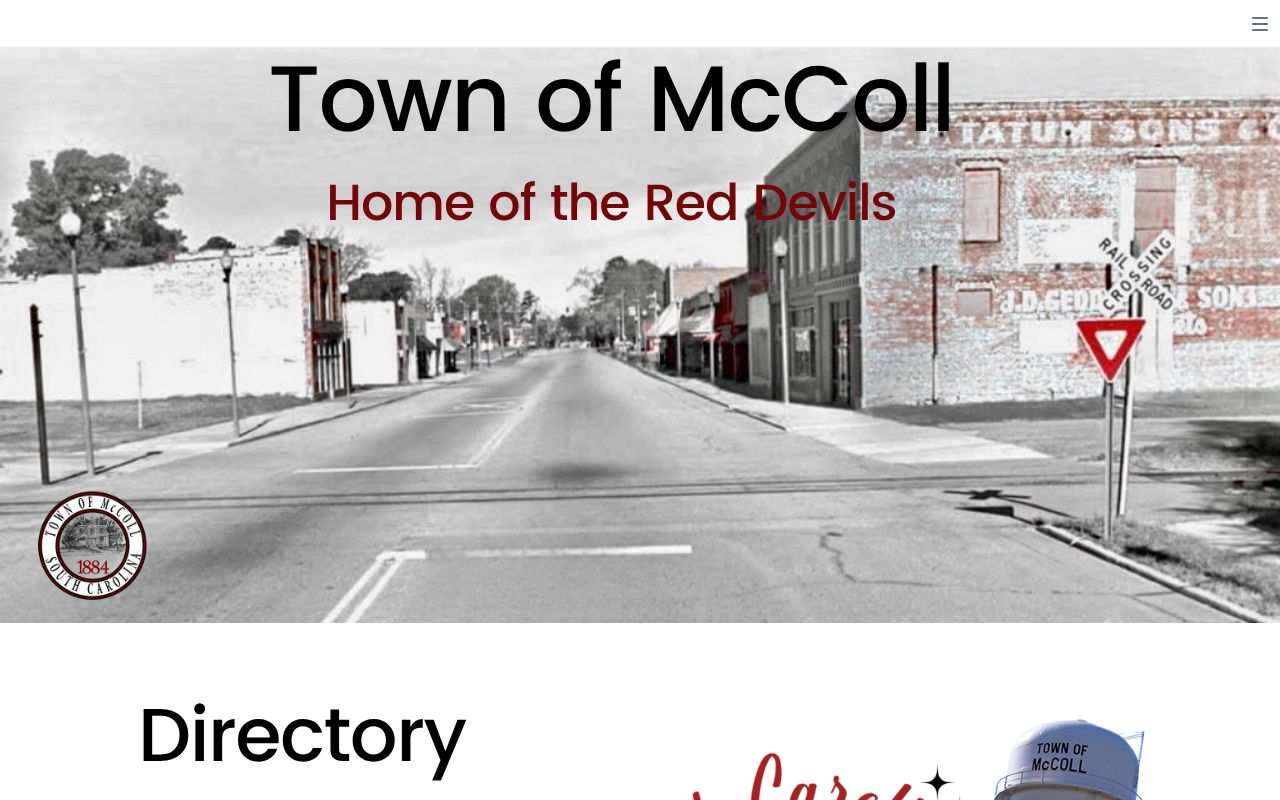
The image reinforces why the McColl channel, rather than a private search vendor, is the first stop for a McColl police record.
Records at the McColl Police Department
McColl police records describe the event reported to or observed by the McColl agency. They may include the initial narrative, incident classification, date, location, responding unit, and later supplements when those parts are public. The McColl report is not a statewide criminal history. It can exist without an arrest, and its first charge label may change after prosecutorial review.
No official source reviewed in August 2026 verified a separate McColl police records address, phone line, lobby schedule, form, or price. Use McColl's official contact path and confirm the right counter before travel. Do not borrow another Marlboro County office's rules. If McColl says a different agency created the report, send the request to that agency because FOIA does not require one public body to produce a file held by another.
Note: A police narrative records an allegation and response; only the court docket can show whether a filed charge ended in conviction, dismissal, or acquittal.
McColl Records Near the State Line
McColl sits near North Carolina, but state record systems do not merge at the border. SLED CATCH covers South Carolina arrest and conviction history reported to SLED. A North Carolina event will not appear merely because the person lives in McColl or the event occurred nearby. Likewise, Marlboro County's Public Index is a South Carolina court source, not a national docket.
For a person's own broad identity review, use the official state or FBI channel that fits the scope. A South Carolina name check can be ordered through SLED CATCH. A personal national Identity History Summary requires fingerprints through the FBI. McColl reports still require McColl contact because neither product supplies the full McColl incident narrative.
| Source | Best Use | Main Limit |
|---|---|---|
| McColl police record | McColl incident or arrest narrative | Not a statewide history |
| Marlboro Public Index | Filed county court case and disposition | Municipal coverage may be partial |
| SLED CATCH | South Carolina name-based history | No North Carolina, warrant, or registry search |
Booking and Arrest Records in McColl
An arrest by McColl police creates more than one record. The McColl agency owns its arrest and incident paperwork. When McColl custody routes through the Marlboro County Detention Center, that facility creates the booking entry. The arresting agency or detention facility fingerprints a person booked for a state offense and must submit that information to SLED within three days, excluding weekends and holidays, under state law.
No official Marlboro online jail roster was verified. For a recent McColl arrest, contact the detention center at 253 Throop Street in Bennettsville or call 843-479-5629. South Carolina VINE can supplement custody checks, but direct jail confirmation remains important. A person transferred after sentence may instead appear in the SCDC locator, which excludes county detainees and people released from state custody.
For a fuller county explanation of each custody channel, the Marlboro County arrest search follows the booking record from agency intake through court disposition.
When McColl Cases Are Not Online
A missing web result is not proof that no McColl record exists. Research found no stand-alone McColl case search, and only some South Carolina municipal courts participate in the statewide Public Index. Older records and document images can also remain at a counter even when the case header appears online.
Try the McColl court with the name and citation or case number. Next, search the South Carolina Case Records Search and select Marlboro County. Use one or two fields at first because all entered criteria are combined. If a higher charge was filed, contact the Marlboro County Clerk at 843-479-5615. Ask the clerk for inspection, certification, copy price, and delivery rules rather than assuming the online index is the full case file.
Note: The Public Index stopped displaying home addresses in 2026, so a blank address field does not mean the McColl case is incomplete.
McColl Municipal Court File
McColl Municipal Court handles qualifying McColl ordinance and summary matters within its legal authority. More serious charges can move to Marlboro County General Sessions in the Fourth Judicial Circuit. The research did not verify a current McColl judge, clerk address, phone, hours, form, or copy fee, so those details should be confirmed through the official McColl channel rather than inferred.
| Court Name | McColl Municipal Court |
|---|---|
| Case Types Heard | McColl ordinance and qualifying summary matters within municipal authority |
| Case Lookup Channel | McColl phone or counter; Marlboro Public Index may show some participating municipal matters |
| What the Docket Shows | Parties, charge or citation, events, status, disposition, and financial entries when maintained or published |
| Copies and Fees | Confirm with the McColl court; no official McColl schedule was located |
Read the outcome field, not just the charge. Pending means no final result is shown. Dismissed or nolle prosequi means that charge did not end in a conviction. A guilty result must still be read with the sentence and any later court action.
McColl Charges Change Court Levels
The label used at arrest does not decide where the case will finish. A McColl citation may remain in Municipal Court. A magistrate may handle a summary criminal matter. Felony and other higher criminal charges proceed in Circuit Court's Court of General Sessions after review by the Fourth Circuit Solicitor. South Carolina uses six felony classes and three classified misdemeanor groups, but the statute for the offense and the filed disposition control the actual record.
- Summary matter
- A lower-level case within a magistrate or municipal court's authority.
- General Sessions
- The Circuit Court forum for felony and other higher criminal prosecutions in Marlboro County.
- True bill
- A grand jury indictment that allows the filed charge to proceed.
- Nolle prosequi
- A prosecutor's decision to discontinue the charge.
These terms show why the municipal entry, booking label, and General Sessions docket should not be treated as duplicate copies.
How McColl Records Reach the County
A McColl case can move through several custodians without any office gaining the full file. Police keep the event narrative. The detention center keeps intake and release facts. The proper court keeps the citation, filings, hearing actions, disposition, and sentence. SLED's repository receives fingerprint-supported arrest data and later reported court outcomes.
Record flow: McColl Police Department › Marlboro County Courts › South Carolina Law Enforcement Division
Timing matters. The police report can exist before a searchable court case. A booking can show an initial charge that the solicitor later changes. SLED may receive the arrest before the final disposition. When entries conflict, compare identifiers and dates, then request the source document from the office that created it.
McColl Supervision Records After Court
A McColl court result may lead to probation, prison, or later parole supervision, but each belongs to a different system. The judgment is the best public source for the sentence. South Carolina's Department of Probation, Parole and Pardon Services manages community supervision through a Marlboro County office, while SCDC maintains state prison information.
The DPPPS offender search provides the state supervision layer described in the source image below. It should not be read as a McColl police database or a list of all people with McColl records.
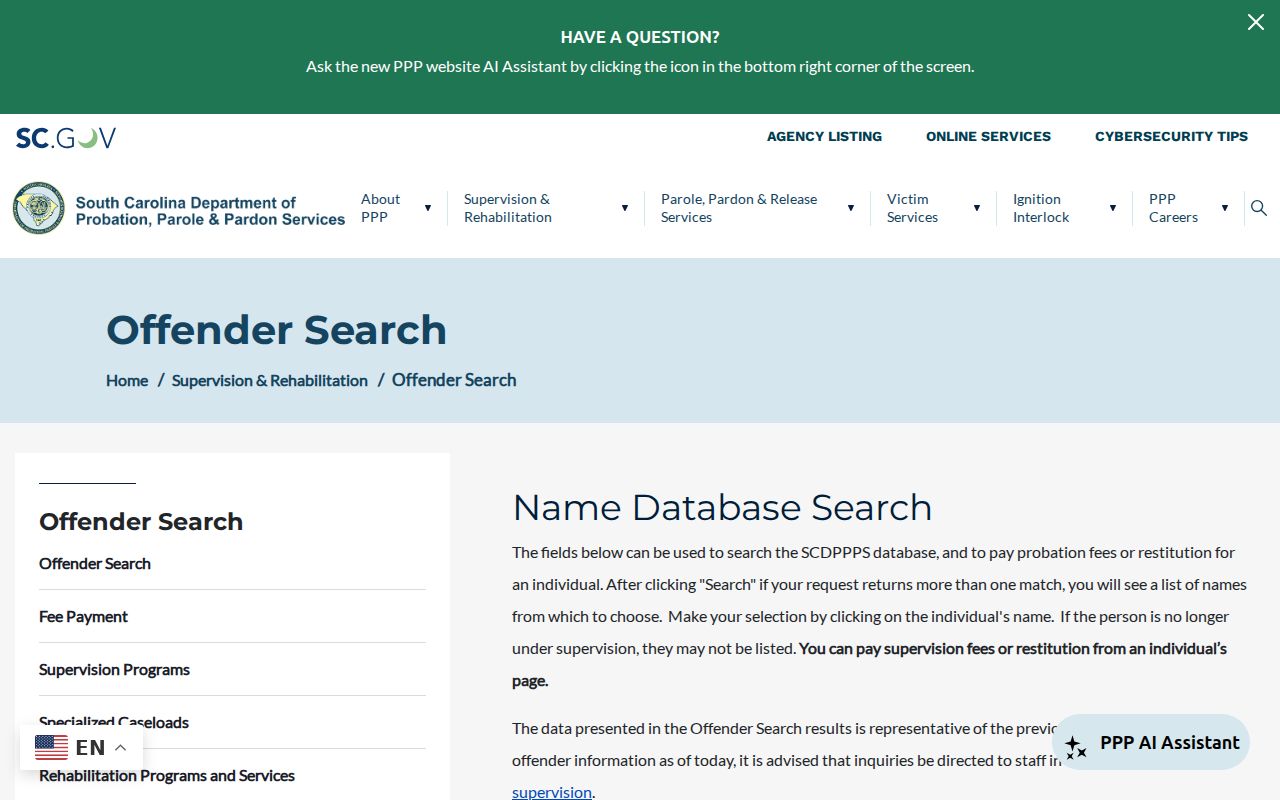
The search adds post-sentence context, while live status and nonpublic case notes remain subject to DPPPS rules and direct verification.
McColl Custody After Transfer
Custody sources answer different time frames. The Marlboro County Detention Center is the first call for a recent McColl booking or county confinement. SC VINE supplies a state custody and notification layer. The SCDC Inmate Search applies only after a person is sentenced to and incarcerated in the state prison system, with data current as of midnight on the prior day.
An absent SCDC result says nothing firm about a McColl arrest. SCDC excludes county detainees, released people, ordinary probation and parole supervision, juveniles housed with the agency, and current fugitives. If the goal is the court outcome rather than location, return to the municipal or county docket. If the goal is the event narrative, return to the McColl police channel.
McColl Record Access Rules
South Carolina law supports public access, but it does not turn every police, jail, or court field into an open record. Send a request to the custodian that holds the document and describe it with enough detail to locate it. McColl may separate releasable facts from exempt investigative, juvenile, victim, medical, or identifying material. Certified court copies must come from the proper clerk.
Key Statutes:
South Carolina Freedom of Information Act sets the right to nonexempt records and permits lawful withholding or redaction.
S.C. Code §23-3-120 requires fingerprint and criminal-data reporting to SLED.
S.C. Code §17-1-40 governs qualifying destruction or sealing of arrest and booking records.
An expungement route depends on where the McColl charge ended. A dismissed qualifying municipal matter starts with that summary court. General Sessions relief starts with the Fourth Circuit Solicitor. A pardon is separate and does not itself erase the record.